In this article
- Step 1: Find a Problem Worth Solving
- Step 2: Validate Before Building
- Step 3: Design the Core User Journey
- Step 4: Build Only the Core
- Step 5: Pricing Strategy
- Step 6: Launch, Don't Perfect
SaaS — Software as a Service — is the most powerful business model available to small teams and indie builders in 2025. Build once, sell repeatedly, earn recurring revenue while you sleep. But most SaaS products fail — not because of bad code, but because of bad product decisions made before a line of code was written.

Step 1: Find a Problem Worth Solving
The best SaaS products solve a specific, recurring problem for a specific, reachable audience. Not "project management for everyone" but "project management for freelance video editors." Specificity is a competitive advantage, not a limitation. It makes your product easier to market, easier to build, and easier to get early users.
- Look for problems in industries you know well — domain expertise is a moat
- Find 'good enough' solutions people are already paying for — this proves willingness to pay
- Recurring problems beat one-time problems for SaaS
- B2B problems are easier to monetize than B2C
Search Reddit, Hacker News, and industry forums for people complaining about existing tools. Real frustration = real opportunity.
Step 2: Validate Before Building
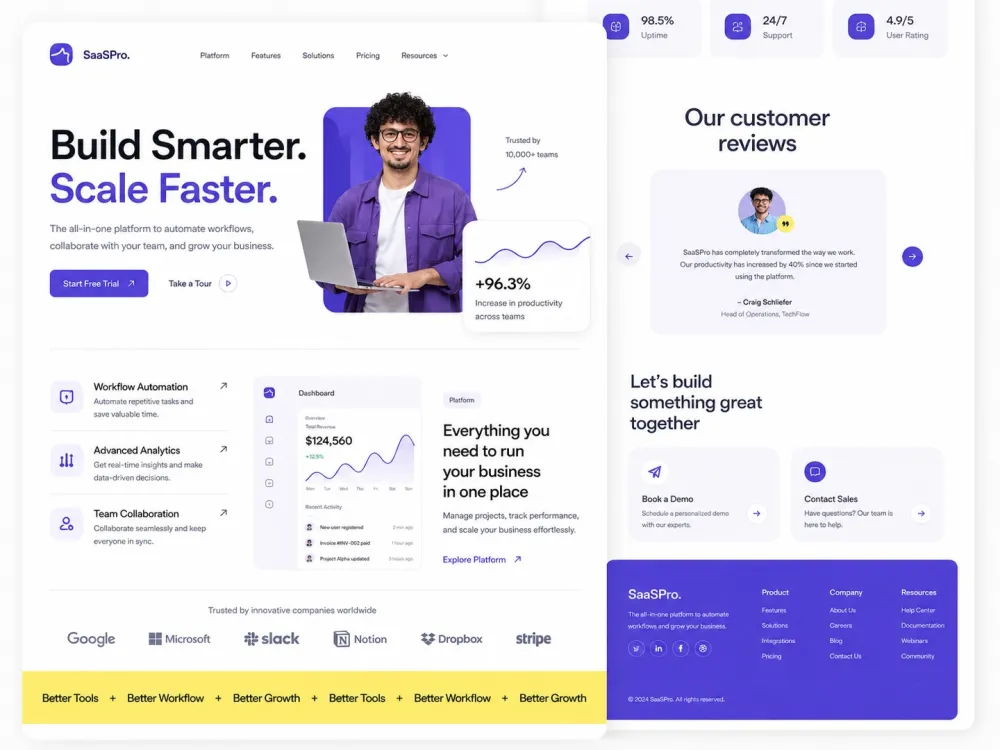
Don't build a full SaaS to validate. Build a landing page with a pricing page and an email signup. Run a small ad campaign. If people sign up and give you their email for a waitlist, you have validation. If people pre-pay (yes, this is possible even before you build), you have strong validation.
Step 3: Design the Core User Journey

Before designing screens, map the core user journey: how does a new user discover your product, sign up, activate (get their first 'aha moment'), become a habit, and upgrade or renew? Every SaaS that succeeds has a clear, frictionless path from signup to the moment the user gets real value.
Step 4: Build Only the Core
Your v1 should do one thing exceptionally well. Not five things adequately. Not ten things poorly. One core workflow, completed beautifully, with authentication and payment. Everything else is v2. The discipline to cut features is the most valuable skill in SaaS product development.
- Authentication (email/password + Google OAuth)
- Your core feature — the one thing that delivers the value promise
- Basic user settings and profile
- Billing integration (Stripe is the standard)
- A way for users to contact support
Step 5: Pricing Strategy
Most first-time SaaS builders underprice. They charge ₹99/month when their users would pay ₹499/month without hesitation. Price anchoring matters — always have a higher tier, even if most users choose the middle. Free plans are expensive (support, infrastructure, no revenue) — consider a free trial instead.
10 customers at ₹5,000/month is better than 100 customers at ₹499/month. Fewer customers means less support, less churn management, and more margin for improvement.
Step 6: Launch, Don't Perfect
Launch when your product solves the problem, not when it's perfect. Perfect is v3. Your first launch is about getting feedback from real paying users. Post on Product Hunt, reach out to potential users directly, write content about the problem your product solves. The fastest learning comes from real users, not from building in isolation.
Aizenmarq has helped multiple startups go from idea to live SaaS product — handling design, development, and launch end-to-end. If you have a SaaS idea you're ready to build, visit aizenmarq.com.